

Contested Workers’ Compensation claims in California are largely selected by QMEs, who are appointed physicians by the State of California to settle the disputes. A panel of three physicians is selected by the State of California, and each party strikes one physician from the list, leaving the last as the QME on the case. There is a significant benefit to appearing on panels as well as having a reputation that keeps a physician from being stricken. In 2022, data obtained from the California DWC revealed intriguing patterns in panel requests, shedding light on preferences and trends in the most sought-after specialties for evaluations.
The 2022 Statistics:
In 2022, a total of 141,239 panel requests were made for Workers’ Compensation claims in California. These requests were distributed among various medical specialties, showcasing distinct preferences:
Musculoskeletal Specialties: A staggering 71.54% of panel requests were for musculoskeletal specialties. This category typically involves specialties like Orthopaedic Surgery, Chiropractic Medicine, Pain Medicine, and Physiatry.
Psych: 9.86% of panel requests were for specialists in Psychiatry and Psychology.
Neurology: 3.71% of panel requests were for Neurologists. This area encompasses evaluations of brain injuries and nervous system disorders related to workplace incidents.
Internal Medicine Specialties: The remaining 8.24% of panel requests targeted internal medicine specialties, including Gastroenterology, Pulmonary Disease, Rheumatology, and Cardiology.
Key Specialties in Panel Requests:
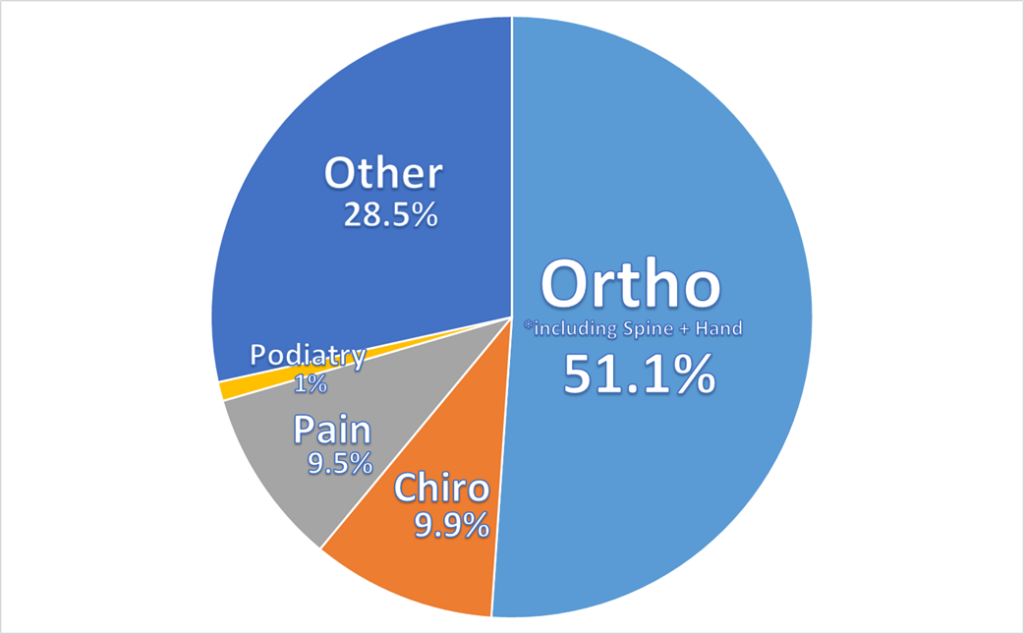
Further analysis of the data unveils the specific breakdown within the major specialty categories and can also be seen in Figure 1:
Orthopaedic Surgery: Roughly 43% of the total panel requests were for Orthopaedic Surgery. This specialty is crucial in assessing musculoskeletal injuries, fractures, joint issues, and spinal conditions resulting from workplace incidents. 32% of all injuries reported in 2022 in California involved sprains, strains, or tears and 9% were lumbar in nature (1).
Chiropractic Medicine: Chiropractic Medicine accounted for 9.91% of panel requests, emphasizing its role in evaluating musculoskeletal health and spinal adjustments.
Pain Medicine & Physiatry: These specialties collectively made up 9.51% of panel requests, indicating their relevance in managing pain and restoring function in individuals affected by work-related injuries.
Understanding the Significance:
The dominance of musculoskeletal specialties in QME panel requests underscores the frequency of injuries and conditions affecting the body’s structural framework in workplace incidents. Orthopaedic Surgery, Chiropractic Medicine, and Pain Medicine/Physiatry play pivotal roles in evaluating and managing these issues, reflecting their value in resolving Worker’s Compensation claims. These statistics further exemplify the significant reliance and need for QME musculoskeletal specialists in California. As an Orthopaedic Surgeon, becoming a QME promises a consistent flow of work due to high demand while helping you achieve financial freedom.
References
- Workers’ Compensation Information System. State of California Department of Industrial Relations. [Online] https://www.dir.ca.gov/dwc/wcis/WCIS_tables/Tables1-3/WCIS_Reports-Table1-3.html