
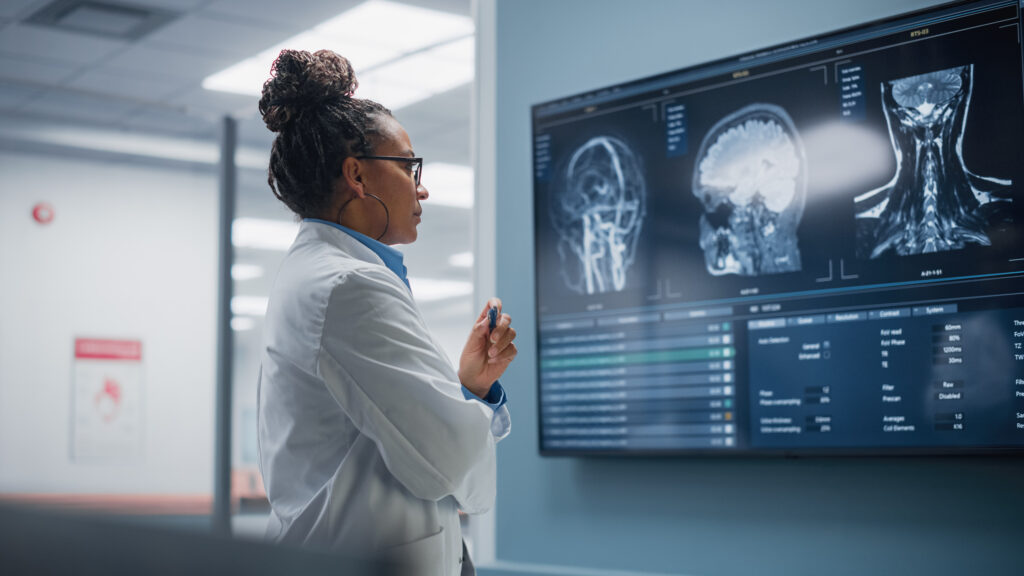
Forensic evaluations such as those conducted by Qualified Medical Evaluators (QMEs) require objective medical evidence such as imaging and diagnostic studies. A QME is required to testify to the reasonable medical probability of industrial causation based on the medical record. These studies serve as evidence of presence or absence of musculoskeletal injuries, which account for over 70% of work-related injuries.
Imaging such as x-ray, MRI, and CT provide objective diagnostic evidence of the presence or absence of an injury to support or refute the worker’s subjective complaints. In most industrial musculoskeletal injuries, evaluation of bony structures with x-ray and soft tissue with MRI are required to support reasonable medical probability of a diagnosis. Electromyography/Nerve Conduction Studies (EMG/NCS) can verify presence of radiculopathy and peripheral nerve compression, while also elucidating confounding diseases such as peripheral neuropathy. While clinical evaluation is often sufficient in clinical practice for diagnoses such as carpal tunnel syndrome and radiculopathy, objective evidence of presence or absence is more appropriate for opinions on a QME case where there is influence of secondary gain in each case.
At OrthoLegal, we strongly recommend all appropriate diagnostic studies to prove either the presence or absence of injury for every claimed body part. Volitionally influenced physical examination maneuvers should not be relied upon alone, though they should be commented upon. In addition, the level of compliance of an injured worker should be documented for each such maneuver, and should factor into the assessment of credibility. The more that the diagnostic studies support the physical examination, the stronger the case for the injured worker.
Considering that most QME evaluations occur due to denial of some portion of the claim, the QME’s ability to order necessary studies may be the only opportunity that the injured worker has to access the diagnostic studies that they need. Often, a QME can easily procure the diagnostic studies that have previously been denied.
Ordering additional imaging and studies is an essential part of providing an accurate, objective, and defensible QME report in Workers’ Compensation cases. Whether it’s confirming a diagnosis, clarifying ambiguities, or guiding treatment plans, these tests play a vital role in ensuring that injured workers receive the medical care and benefits they deserve. QMEs who incorporate these tools into their evaluations not only improve the quality of their reports but also provide a higher standard of care for workers navigating the complexities of the Workers’ Compensation system.